New research paper
Review of data on hoof growth in normal and laminitic equines suggests a new aetiology for acute laminitis, by Tom Ryan FWCF
This paper is based on hoof growth measurements taken by Tom and is the basis for many of the extended concepts presented on this website. The paper is not copyrighted and can be downloaded and shared.
Read / DownloadA new and powerful concept for equine laminitis
One frequently over-looked aspect of laminitis is abnormal hoof growth, but recently hoof growth has been attracting a lot more interest. In his PhD thesis Ramzi Al-Agele(1) observed while conducting in vitro experiments on horn producing keratin cells extracted from different areas of equine coronary band tissue, cells from the quarter region divided more rapidly when exposed to higher levels of insulin, while the same cells from the front of the hoof were not affected in the same way.
Combining Ramzi Al-Agele’s observations with a greater understanding of equine metabolic syndrome (EMS) which is known to have an undefined relationship with laminitis, raises an interesting possibility, could EMS be affecting how the hoof capsule grows?
...hoof distortion is not the result of laminitis, it's the cause. Tom Ryan FWCF
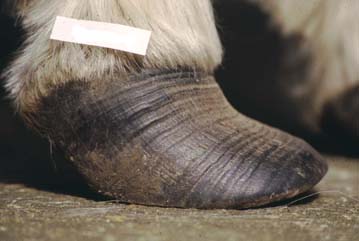
The Dorsal Wall Lifting model for equine laminitis proposes that laminitis is induced when hoof growth at the quarters abnormally accelerates, which subsequently induces the hoof capsule to distort. This distortion will induce pain in the underlying laminal bond, signalling the start of the acute phase.
The severity of a particular laminitis case will depend on the shape & strength of the hoof capsule combined with the rate of acceleration of hoof growth at the quarters, the stronger the hoof capsule the more severe the case. More >
The idea that the dermal laminae are being destroyed by hoof capsule distortion has never been considered before. The factors known to cause laminitis may be altering the way hoof is grown and not directly insulting the dermal laminae.
In short – the laminae are innocent victims of abnormal hoof growth which causes hoof capsule distortion.
(1) Al-Agele, Ramzi. Histopathological and ultrastructural characterization of equine hoof shape deformities. PhD Thesis, Nottingham, UK: University of Nottingham, 2018.
What you will learn about equine laminitis:
- A new insight into laminitis
- An effective method of managing laminitis
- The importance of hoof shape and strength in laminitis
Follow the links for more information:-
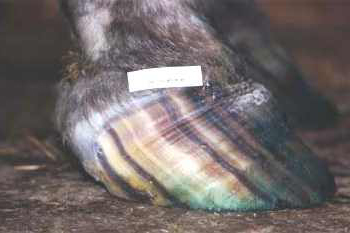
A new insight into laminitis
Dorsal Wall Lifting Theory - Explained
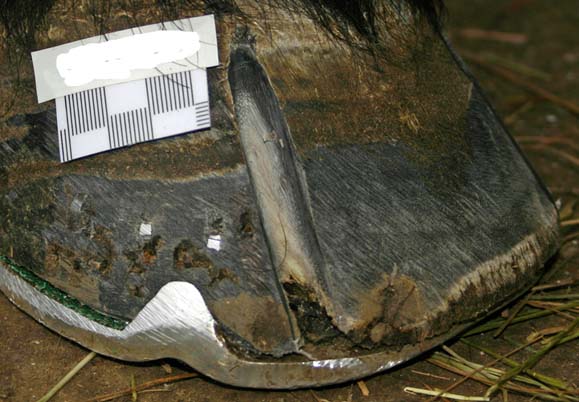
Grooving
Vertical grooving for laminitis explained.
Laminitis Basics
Click here for background information
Additional information
DWL Theory
In depth explaination
Hoof shapes and Founder
Shape determines how the distal phalanx will founder
History
A brief history of grooving from 1683,1906 & 1990's
Grooving Videos
Two videos of before and after grooving
How to groove
Guidance for vets and farriers
FAQ
Frequently asked questions
International 2018 Results
Held at Stoneleigh, UK
September 15th and 16th 2018
Score
Score is a Farriery Competition Organiser for Windows. Score is now free to download.
Quick visit
In a hurry, things in a nutshell